February 16, 2026
Digital Marketing
Campaign Strategy
Time to Read:
5 minutes
Author:
Royann Dean
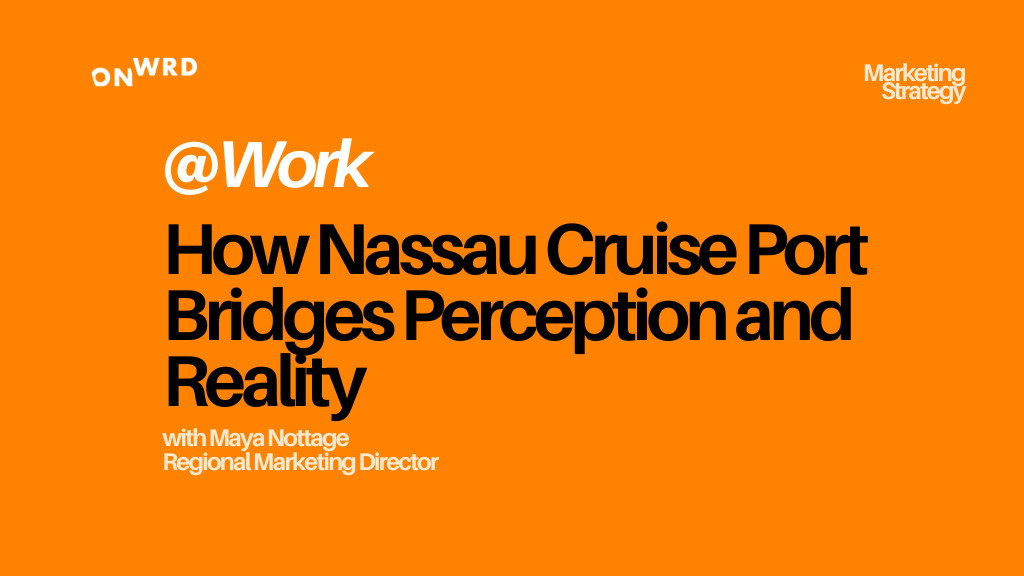
Featuring insights from Maya Nottage, Regional Marketing Director at Nassau Cruise Port
Nassau Cruise Port has become one of the country’s most active public spaces. It welcomed over 6 million cruise passengers in 2025 while offering Bahamians new access to the harbourfront. In our conversation with Regional Marketing Director Maya Nottage, one theme surfaced again and again. Destination marketing succeeds when it closes the gap between what people think a place is and what the experience actually offers. Maya’s perspective shows how authenticity, feedback and community access shape the port’s strategy.
Maya’s team navigates two distinct audience mindsets. International visitors often see news about record-breaking passenger days and assume Nassau is too crowded. Locals, on the other hand, remember a time when the port was completely inaccessible.
These perceptions matter because they shape how people engage with the destination. The port’s communication strategy starts with identifying those beliefs and addressing them directly through storytelling, content, and in-person experiences.
“One of the biggest challenges has been trying to bridge the gap between perception and reality for both our local and international audiences.”
The lesson is straightforward. Marketing cannot shift behaviour until it understands the beliefs driving it.
Nassau Cruise Port’s approach begins with its roots as a Bahamian-owned and Bahamian-run organisation. Instead of building a separate narrative for visitors, the team highlights local businesses, local influencers, and the people who make the space what it is.
This reinforces a sense of pride for Bahamians while giving visitors a genuine experience that reflects the country.
“We lead with who we are. We are a Bahamian company, and we really try to implement every part of our Bahamian identity into our marketing and communications.”
Authenticity becomes the differentiator when audiences want something real and memorable.
For Maya, success is not defined by how often the port posts or how visible a campaign looks on the surface. It is defined by whether the work drives real outcomes for tenants, partners and the community.
That includes visitor movement, digital engagement, event attendance and daily guest surveys. It also includes monitoring local sentiment and social conversations that influence public perception.
“We want to make sure that what we are doing is driving real business outcomes. We look at the data, the movement in and around the port, our event numbers and our digital metrics.”
The message is clear. Strong marketing blends creativity with measurable results.
Before the redevelopment, the port was not open to the public. Today, families can watch the harbour, enjoy events, shop local brands or simply sit outside by the waterfront. This shift is not a side benefit. It is core to how the port positions itself to Bahamians.
Access is an experience, a story and a signal of who the port is for.
“I am proud to be part of a project where Bahamians have been considered and thought of in this way. We have created a space where people can work, do business and enjoy the waterfront.”
When public spaces are designed with community use in mind, they strengthen the brand and deepen local connection.
Maya’s leadership in introducing the Hidden Disabilities Sunflower program shows how operational decisions reflect values. The initiative gives travelers with hidden disabilities a discreet way to signal that they may need help.
For her, accessibility is part of building a destination that treats all people with dignity.
“People with hidden disabilities travel and deserve to travel. If we can make it a little easier for them and their families, it makes life better for all of us.”
This reinforces a broader principle. Inclusion strengthens the experience for visitors and locals alike.
Nassau Cruise Port’s approach shows that destination marketing works best when it reflects the truth of the experience. By aligning storytelling with reality, measuring what matters and giving communities a space they can claim as their own, the port is redefining how a major tourism gateway can function. The lesson for Bahamian teams is clear. Stronger brands emerge when perception and lived experience move closer together.
Maya’s perspective highlights an issue many organisations face. Managing public perception requires steady communication, authentic insight and a willingness to stay close to what audiences value. If your organisation needs support refining its communication strategy, contact us to learn how ONWRD strengthens marketing and communication capacity.


July 20, 2026
Communication Strategy