August 17, 2026
Communication Strategy
Time to Read:
Author:
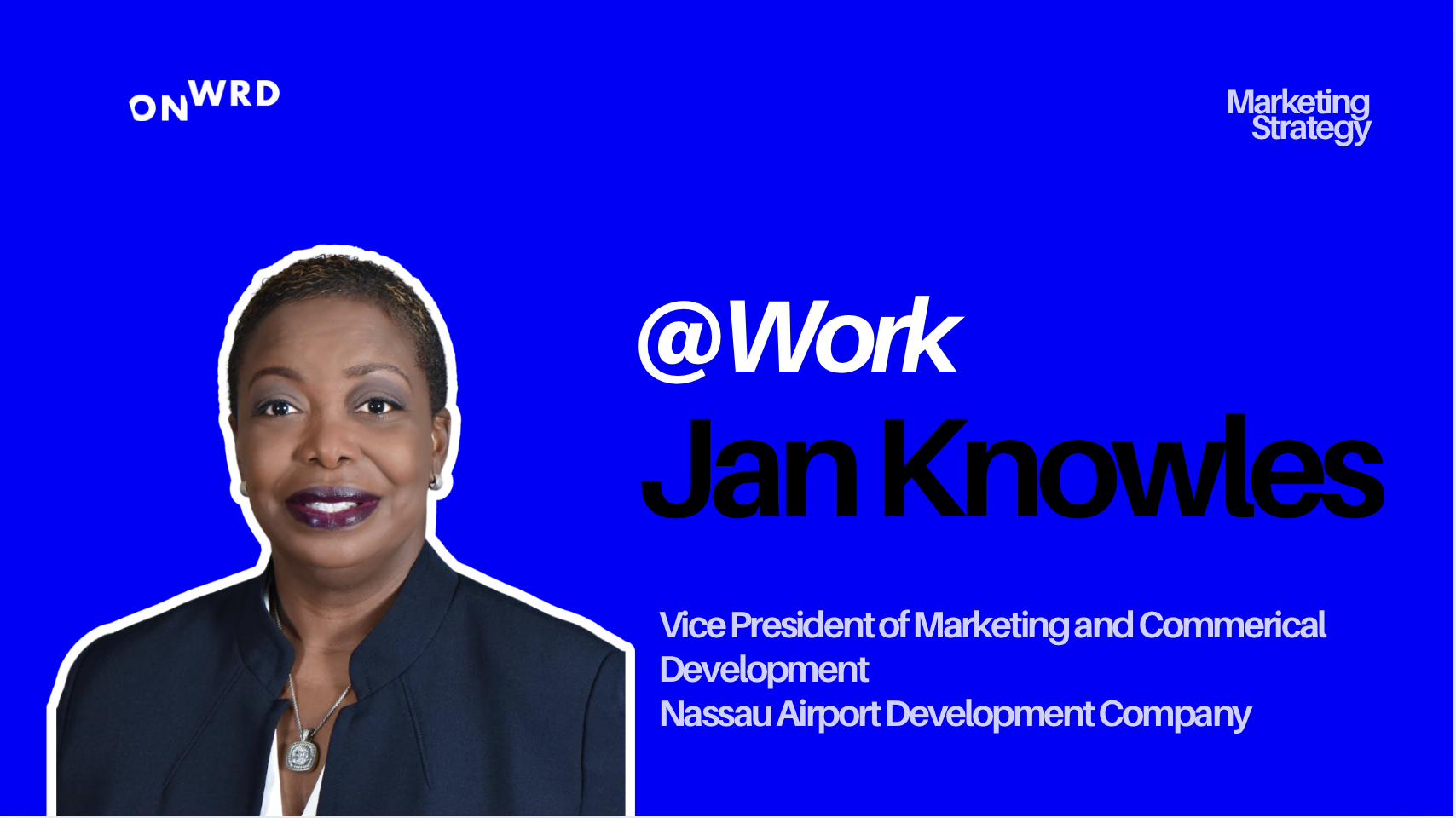
Lynden Pindling International Airport (LPIA) is the gateway to The Bahamas and one of the busiest airports in the Caribbean. Behind it is Nassau Airport Development Company (NAD), which operates the airport as a self-sustaining business. In our recent @Work conversation with Jan Knowles, Vice President of Marketing and Commercial Development at NAD, one message came through clearly. Marketing in this environment is not about reach or volume. It is about precision, operational understanding and a brand experience that runs through 4,000 people. Her perspective shows how strategy and intelligence can turn marketing into a true business driver.
Airport marketing is rarely aimed at a single audience. At Nassau Airport Development (NAD), every marketing decision is shaped by two distinct customer groups, each with different priorities and expectations.
On one side are airline partners, who rely on market data, passenger demand, and commercial insights when deciding whether to add new routes or increase seat capacity. On the other are passengers, whose experience is shaped by everything from terminal navigation to retail, dining, and overall convenience.
Both audiences have a direct impact on the airport's commercial performance. Airline partnerships drive aeronautical revenue, while passenger engagement influences spending across retail and food and beverage concessions.
As Jan explains:
"We have to market the airport and the destination to our airline partners. And then there's our passengers. We're marketing to them to use the services that are in the airport."
The lesson is clear: effective marketing begins with understanding that not all customers have the same needs. Rather than relying on a one-size-fits-all message, marketers should tailor their strategies to the audiences that drive business outcomes.
The COVID-19 pandemic exposed how vulnerable airports were to relying on a single revenue stream. In response, NAD broadened its commercial strategy, looking beyond traditional aeronautical revenue to identify new opportunities for growth. The team developed a landside development plan that extends beyond runways and terminals, exploring commercial ventures such as cargo operations, retail, and shopping plazas. Airports around the world have adopted similar approaches, expanding into advisory services, technology, and other non-aeronautical revenue streams.
Unlike many airports, NAD operates without government subsidies. Instead, it funds its operations through airport-generated revenue, including aeronautical fees such as passenger and landing fees, as well as non-aeronautical revenue from tenant rent, retail and food and beverage (F&B) concessions, parking and other commercial activities. That reality makes commercial development and marketing inseparable—both functions must work together to generate sustainable growth.
The Lesson: Revenue diversification isn't solely a finance initiative. Marketing plays a critical role in identifying new commercial opportunities, attracting partners, and creating demand for the businesses that support long-term airport growth.
With 4,000 people across the airport community, including airlines, government agencies, retail tenants, and the airport operator, brand consistency cannot simply be designed. It has to be trained. NAD's My LPIA program, launched in early 2025, is built around that idea. The goal is to earn a Skytrax Five-Star Airport rating, one of the aviation industry's highest international benchmarks for customer experience and service quality. To help achieve that, the program is training all 4,000 airport employees, with about 800 having completed the program so far.
Consistency comes from how staff greet passengers, the language they use, the tone they set and the small interactions that turn a transit experience into a memorable one.
"Our brand is our people, and so training staff to deliver a consistent and high level of friendly service. That is the key."
For brand-led organizations, the takeaway is direct. Service culture is brand strategy.
In a commercial environment with limited space, every square foot matters. More retail and F&B can drive revenue, and more advertising can increase visibility. But too much of either creates a cluttered experience that weakens the brand.
NAD takes a different approach. Instead of filling the terminal with promotional messaging, the team focuses on communication that improves the passenger experience. Simple messages, such as letting travelers know no gate is more than a five-minute walk away, reduce uncertainty and encourage more time spent in the airport's retail and dining areas. It is not just advertising. It is customer care.
As Jan explains:
"Do you want to be known as a noisy airport with shops and advertising all over the place, or an intentional airport where you care about the passenger and you have offers tailored for the passenger demographic?"
The Lesson: The strongest brands do not fill every available space. They make every message purposeful.
Jan believes influence in the boardroom comes from preparation and operational fluency. Marketing leaders who do not understand the business they support risk producing work that misses the mark and being left out of key decisions.
That fluency means understanding how the business operates, where revenue comes from, the constraints the organization faces, and the context behind its decisions. It also means spending time in the field, listening across teams, and connecting marketing to business priorities.
As Jan explains:
"You have to be at the table because you have to be able to understand the context. You need to understand the whole picture."
The Lesson: Marketing leaders earn influence by understanding the business as deeply as they understand the brand. That is what gives them a seat at the table and a voice in the decisions that shape it.
NAD's approach shows that strong marketing in a complex commercial environment depends on three things: a clear understanding of who the audiences really are; a commercial mindset that connects revenue, operations, and brand; and a leadership stance that earns influence through preparation, data, and operational understanding.
For Caribbean teams managing brands in industries where every decision carries commercial weight, Jan's perspective offers a practical example. Marketing is most powerful when it speaks the language of the business and stays closely connected to how the work actually gets done.
Is your team working to make marketing more strategic and commercially aligned? Contact us to explore how ONWRD can support your team and help you build the influence that drives results.


July 20, 2026
Communication Strategy
July 14, 2026
Communication Strategy